
Chinese airline China Eastern is set to begin its Delhi-Shanghai flight from Sunday, days after IndiGo's flight to Guangzhou from Kolkata, marking the resumption of the flight services between the two countries after a gap of five years.
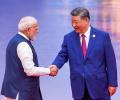
'When the Galwan incident took place, that was a big break in the trust factor between India and China.'

India and China have reached new common understandings agreeing to conduct normalised management and control of the boundary during Foreign Minister Wang Yi's visit to New Delhi, Beijing said.
Prime Minister Narendra Modi and Chinese President Xi Jinping held talks focusing on rebuilding bilateral relations, emphasizing border peace and addressing cross-border terrorism.
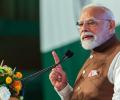
Prime Minister Narendra Modi on Friday said it is important for India and China to work together to bring stability to the world economic order as he asserted that New Delhi is ready to advance bilateral ties from a strategic and long-term perspective based on mutual respect, mutual interest and mutual sensitivity.

India emerged from the war militarily bruised and strategically altered. The United States, under the guise of friendship, had succeeded in achieving what open alignment never could: The psychological and political repositioning of India within the Cold War order, points out Dr Kumar.

The Bloomberg report suggests that this backchannel communication from President Xi has laid the groundwork for a broader thaw in relations. This overture has since translated into a series of tangible diplomatic actions leading up to the upcoming Shanghai Cooperation Organisation (SCO) summit.
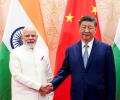
'What's currently underway is not a 'reset'.' 'What needs to be arrived at is a new balance.'

Echoing United States President Donald Trump's stance on imposing economic sanctions against countries maintaining trade ties with Russia if Moscow doesn't put an end to the conflict in Ukraine, North Atlantic Treaty Organisaiton (NATO) Secretary General Mark Rutte on Tuesday (local time) urged India, China, and Brazil to reconsider their economic relations with Russia, warning of potential secondary sanctions, reported Reuters.

Prime Minister Narendra Modi and Chinese President Xi Jinping are expected to hold bilateral meetings on the sidelines of the SCO summit in Tianjin, as both nations look to strengthen ties amid global trade tensions.
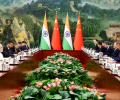
Chinese President Xi Jinping told Prime Minister Narendra Modi that India and China should approach their relations from a "strategic" and "long-term perspective" during their talks in Tianjin. Xi also emphasized upholding multilateralism and working towards a multipolar world.

India and China reviewed the situation along the Line of Actual Control (LAC) in eastern Ladakh and prepared for the next Special Representatives' dialogue on the boundary question.

'If Washington has to balance Chinese power, she will have to turn to the third biggest power in the world which is India.' 'The United States and India will have to work together in order to keep Chinese ambitions in check.'

The Global Times, a prominent state-run Chinese media outlet, published an article titled "China and India are cooperation partners, not rivals: Xi," highlighting President Xi Jinping's remarks about the bilateral meeting, saying, "as long as the two countries stick to this overarching direction, China-India relations can sustain steady and long-term growth."

Two senior Chinese ministers attended India's Independence Day reception in Beijing, signaling a potential improvement in relations ahead of Prime Minister Modi's expected visit to China for the Shanghai Cooperation Organisation summit.
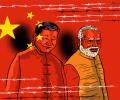
The bilateral trade between India and China has been growing at a healthy rate, but the trade gap remains sharply tilted in Beijing's favour. India has time and again flagged its concern over the ballooning trade deficit and the non-trade barriers faced by Indian goods in the Chinese market.
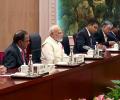
India is committed to taking forward its ties with China based on mutual trust, respect and sensitivity, Prime Minister Narendra Modi told Chinese President Xi Jinping as the two leaders held wide-ranging talks to reset the bilateral relations.
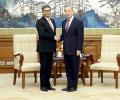
Foreign Secretary Vikram Misri on Monday called on Chinese Foreign Minister Wang Yi and discussed issues of bilateral interest.
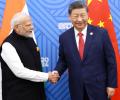
Chinese President Xi Jinping on Wednesday pledged to strengthen the strategic relationships with neighbouring countries by 'appropriately' managing differences and enhancing supply chain ties as China's tariff war with the United States escalated.
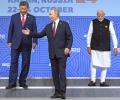
Russian Foreign Minister Sergey Lavrov alleged that NATO is blatantly trying to lure India into anti-China intrigues.

On August 5, 1953, Jawaharlal Nehru sent a strange note to the foreign secretary. It is worth mentioning because it was symptomatic of the lack of knowledge about Western Tibet in India and in South Block in particular, notes Claude Arpi.
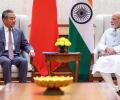
China's Foreign Minister Wang Yi expressed China's anticipation for Prime Minister Narendra Modi's visit to the Shanghai Cooperation Organisation (SCO) summit, emphasizing the importance of strong India-China relations and mutual cooperation.
Chinese Foreign Minister Wang Yi said on Friday that India-China relations have made positive strides and achieved a series of encouraging outcomes at all levels after last year's breakthrough ending the over four-year-long military standoff in eastern Ladakh. Wang's remarks came during his annual press conference as he replied to a question on how Beijing views the course of bilateral ties after the two countries ended the prolonged stalemate in the ties.

'The virus of trust deficit seems to be taking a toll of the friendship built over the years by succeeding leaderships of the two countries,' notes Rup Narayan Das.

Nepal has reiterated its claim over the Lipulekh territory, stating it is an inseparable part of the country, after India and China agreed to resume border trade through the area. The Nepalese government has incorporated the territory into its official map and Constitution. India has rejected Nepal's claims, asserting they are not based on historical facts or evidence.

Former Indian ambassadors urge New Delhi to closely monitor the unfolding political crisis in Nepal, citing regional instability and potential implications for India's interests.

'There are active terror modules across the country who will find new ways and new targets. From intelligence agencies to an alert citizenry, we all have to play our part.'
Chinese envoy Xu Feihong stated that China opposes the US imposing tariffs on India, amidst a thaw in Sino-India relations and concerns over global trade disruptions.
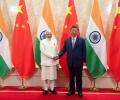
Prime Minister Narendra Modi and Chinese President Xi Jinping held bilateral talks focusing on economic ties and global stability amid trade tensions and the aftermath of the Ladakh border row.


Chinese Foreign Minister Wang Yi said that it is imperative for the two sides to view each other as partners and opportunities rather than rivals or threats, and invest their valuable resources in development and revitalisation.

Following the disengagement, both sides will soon start the coordinated patrolling in their respective areas, sources added.

'There are times when India should stand up without hesitation and voice its indignation over the US' pressure tactic. This is one such moment,' asserts Ambassador M K Bhadrakumar.

National Security Advisor Ajit Doval on Monday emphasised the need to counter terrorism in all its forms for overall regional peace and stability during a meeting with Chinese Foreign Minister Wang Yi in Beijing.
South Asian expert Professor Ma Jiali speaks on Sino-Indian relations and what Dr Singh visit to China means.

Stock markets will be driven by RBI's interest rate decision, tariff-related developments, global trends and trading activity of foreign investors in this holiday-shortened week, analysts said.

'Tensions and dialogue are likely to go hand-in-hand with China.' 'The goal should be to cultivate power so that one can negotiate from a position of strength.'
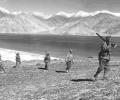
As India and China continue to face off across the Himalayas six decades later, the echoes of that earlier conflict remain unmistakable. The core of China's sensitivity lies not in maps or mountain passes, but in its perception of sovereignty over Tibet, points out Dr Kumar.
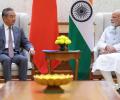
Former Army chief Gen M M Naravane (retd) said India-China ties are "on the mend" with initiatives announced at political, diplomatic and military levels. He expressed hope that China will reciprocate India's goodwill as they move forward in discussing the boundary question.
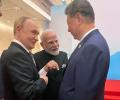
'One Chinese interlocutor said India should realise that "China can do without India, but India could not do without China", pointing to its inability to do without Chinese intermediates and components,' former foreign secretary Shyam Saran discovers on a visit to China.
 © 2026 Rediff.com - Investor Information - Advertise with us - Disclaimer - Privacy Policy - Sitemap - Feedback - About us - Terms of use - Grievances